
Planning Beaded Plants: The Story Behind Every Design.

People often ask me how a beaded plant begins, and how Planning Beaded Plants looks like.
Some imagine I simply sit down with a box of beads and start creating.
I wish it were that simple.
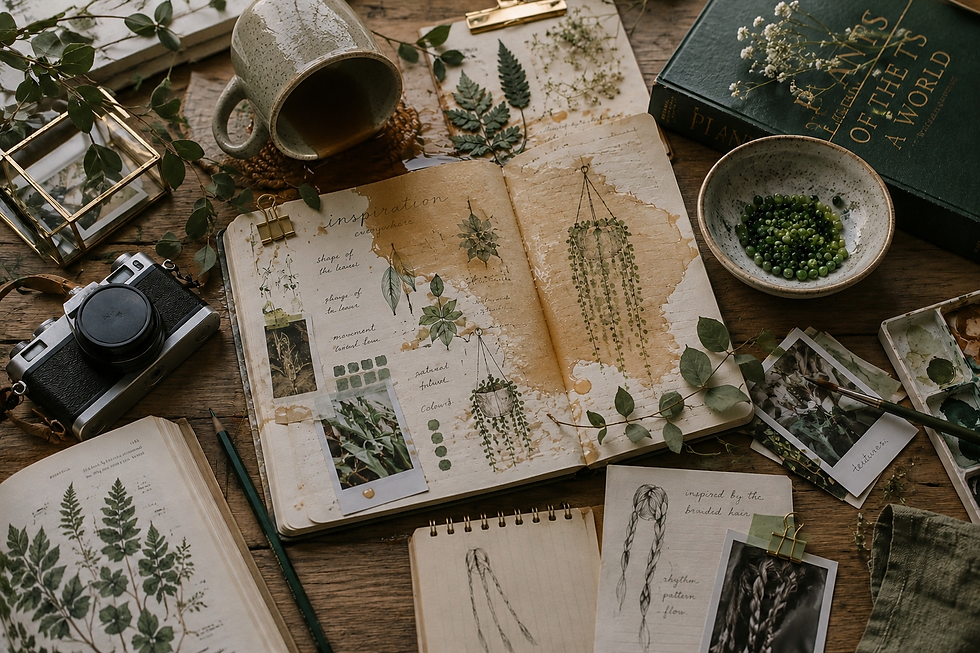
Every design actually starts long before I pick up a single bead. It begins in my sketchbook, usually with a quiet cup of tea beside me and an idea that has been gently growing in my mind.
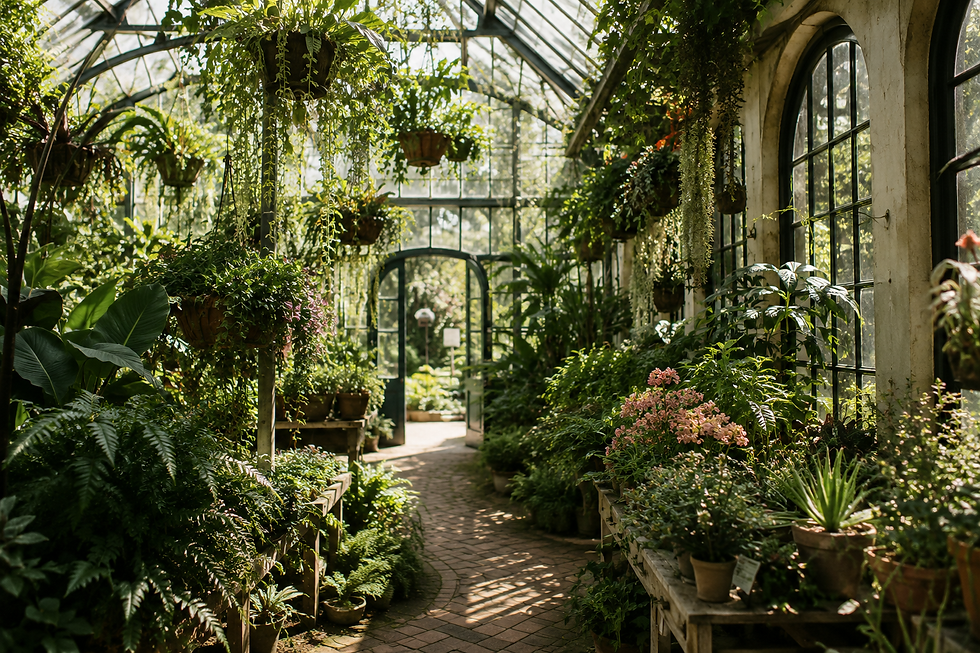
Sometimes it’s inspired by a walk. Other times it’s a tiny detail I’ve noticed on one of my houseplants, the curve of a leaf, the way the light catches a hanging vine, or the colours changing throughout the day.
Once an idea refuses to leave me alone, I know it’s time to draw it.

My first sketches are never perfect. They’re loose, full of notes and little arrows, almost like a conversation with myself. I’m not trying to create beautiful artwork at this stage. I’m trying to understand the shape of the plant and how I might recreate that movement using glass beads.
After that comes my favourite part…
The watercolours.
I love seeing the design slowly come to life with colour. This is where I begin exploring different shades of green, adding warmer tones, cooler shadows and little hints of light. It helps me decide what feeling I want the finished piece to have before I even think about making it.

Only then do I start planning the beads.
This part takes much longer than most people realise.
Glass beads come in hundreds of colours, finishes and sizes. Two shades that look almost identical in a packet can look completely different once they’re hanging in natural light. Some sparkle beautifully but lose the softness I’m looking for. Others have exactly the right colour but don’t catch the light quite enough.
So I spend time comparing them, laying them next to my painting, moving them around, looking at them in daylight and making small changes until everything feels right.
Sometimes I already have the perfect beads waiting in my studio.
Sometimes I don’t.
That means placing another order and patiently waiting for tiny packets of beads to arrive before I can continue. It isn’t the quickest way to work, but I’d rather wait than compromise on the final piece.
Then comes the first prototype.
This is where the real problem-solving begins by Planning Beaded Plants.
A strand might be too long. A leaf might need another row of beads. The shape might not flow quite as naturally as it did in my sketch. Occasionally I decide an entire section needs redesigning, even after hours of work.
It can be frustrating.
But it’s also one of my favourite parts of creating because every prototype teaches me something new.
By the time I make the final version, the design has already travelled quite a journey.
It has lived in a sketchbook.
It has been painted in watercolour.
It has been tested with different colour palettes.
It has waited for the right beads to arrive.
It has been remade, adjusted and refined until it finally feels complete.
When someone sees the finished beaded plant hanging in their home, they’re seeing much more than glass beads and wire.
They’re seeing every quiet morning spent sketching, every colour carefully chosen, every tiny adjustment and every little decision made along the way.
And I think that’s what handmade really means.
Not perfection. But patience, care and creating something with a story before it ever reaches yours.
Thank you for being here and for appreciating the story behind each piece.
It means more than you probably realise.
With love,
Elisan Arts 🌿
Comments